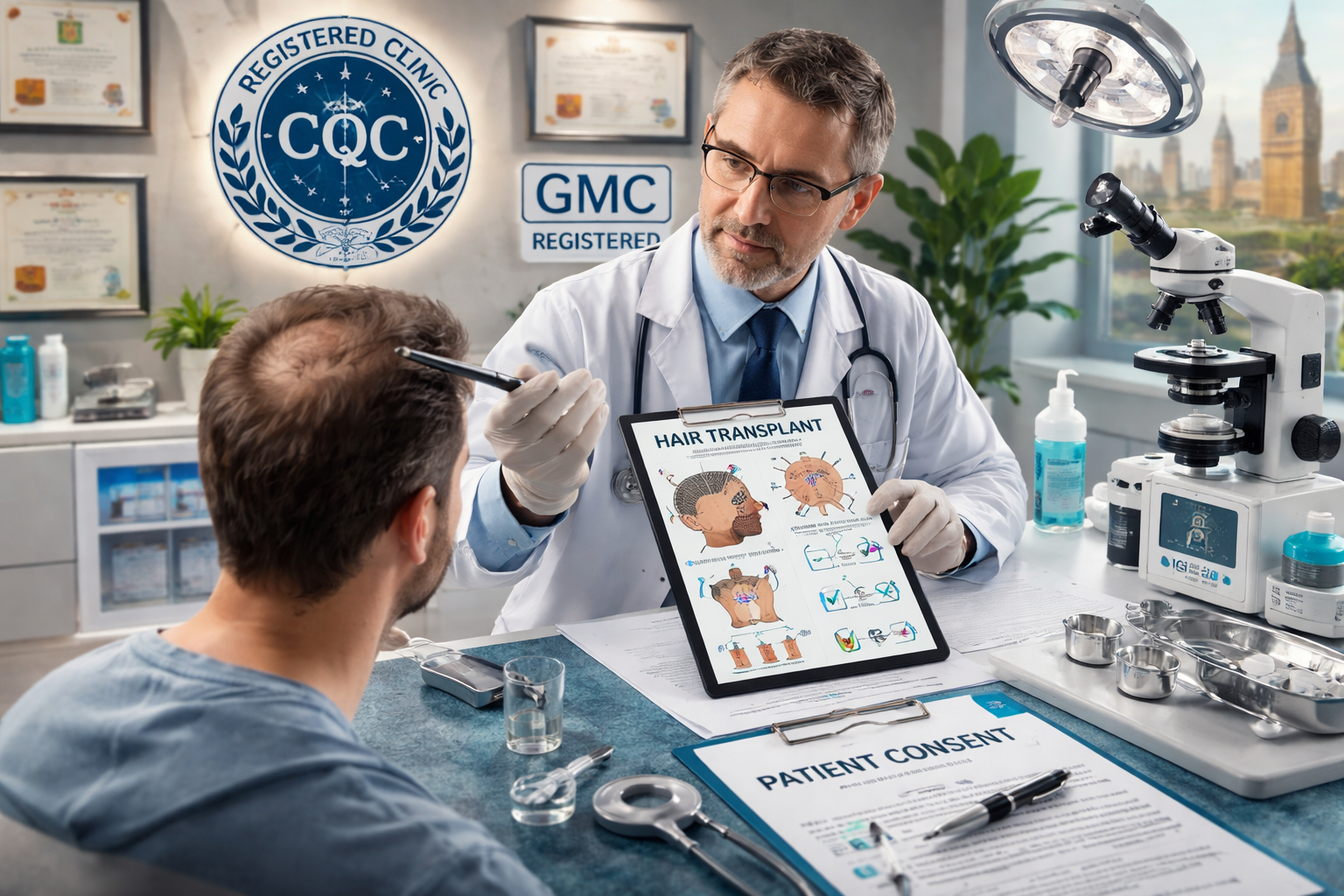
Hair loss treatment, particularly hair transplantation, has evolved into a highly sophisticated medical field. With increasing demand across the UK and globally, patients are no longer simply asking “does it work?”—they are asking “is it safe?” and “who regulates it?” As a hair transplant specialist, I can confidently say that safety and regulation are now the defining factors that separate reputable clinics from risky operators.
This comprehensive review explores the safety standards, regulatory frameworks, and patient protections surrounding hair loss treatments, with a focus on the UK. It also highlights what patients should look for before undergoing any procedure.
Understanding Hair Loss Treatments and Their Risks
Hair loss treatments fall into two main categories: non-surgical and surgical.
Non-surgical treatments include medications such as minoxidil and finasteride, while surgical options primarily involve hair transplantation techniques like FUE (Follicular Unit Extraction) and FUT (Follicular Unit Transplantation).
While these treatments are generally safe when properly administered, they are not risk-free. Potential complications may include:
-
Infection
-
Scarring
-
Poor graft survival
-
Unnatural hairlines
-
Medication side effects (e.g., hormonal changes)
The level of risk largely depends on the provider’s expertise, adherence to safety protocols, and regulatory oversight.
The Importance of Regulation in Hair Transplantation
Hair transplantation is a medical procedure, not a cosmetic luxury service. This distinction is crucial because it determines how clinics are regulated and who is legally allowed to perform procedures.
In the UK, strict frameworks are in place to protect patients. These regulations ensure:
-
Only qualified professionals perform procedures
-
Clinics meet hygiene and safety standards
-
Patients receive informed consent and aftercare
Without regulation, the industry would be vulnerable to unqualified practitioners offering unsafe treatments.
Key Regulatory Bodies in the UK
1. Care Quality Commission (CQC)
The Care Quality Commission (CQC) is the primary regulatory authority for healthcare services in England. Any clinic performing surgical hair restoration must be registered with the CQC.
The CQC evaluates clinics based on:
-
Safety
-
Effectiveness
-
Patient care
-
Leadership and management
Clinics are inspected regularly, and reports are publicly available. This transparency allows patients to make informed decisions.
2. General Medical Council (GMC)
The General Medical Council regulates doctors in the UK. Any surgeon performing a hair transplant must be registered and licensed by the GMC.
The GMC ensures that practitioners:
-
Maintain professional standards
-
Provide safe and ethical care
-
Are accountable for their actions
If a doctor fails to meet these standards, they can be suspended or struck off.
3. Medicines and Healthcare products Regulatory Agency (MHRA)
The MHRA oversees the safety of medications and medical devices used in hair loss treatments.
This includes:
-
Approval of drugs like finasteride
-
Monitoring adverse effects
-
Ensuring compliance with safety standards
Patients should only use medications that are MHRA-approved.
4. British Association of Hair Restoration Surgery (BAHRS)
Although not a regulatory body, BAHRS plays a vital role in setting professional standards within the industry.
Members of BAHRS commit to:
-
Ethical practice
-
Continuous education
-
Patient-first approaches
Choosing a BAHRS-affiliated surgeon adds an extra layer of reassurance.
Who Is Legally Allowed to Perform Hair Transplants?
One of the most critical safety concerns is who performs the procedure.
In the UK:
-
Only licensed doctors should design the hairline and perform key surgical steps.
-
Technicians may assist but must work under direct medical supervision.
Unfortunately, some clinics—particularly those operating at low cost—delegate the entire procedure to technicians. This is a major red flag and significantly increases the risk of poor outcomes.
Clinic Licensing and Inspection Standards
To operate legally in the UK, a hair transplant clinic must:
-
Be registered with the CQC
-
Meet infection control standards
-
Maintain sterile surgical environments
-
Provide emergency protocols
-
Ensure proper staff training
During inspections, regulators assess:
-
Cleanliness and hygiene
-
Equipment sterilisation
-
Patient record management
-
Consent procedures
Failure to meet these standards can result in closure.
Informed Consent: A Legal and Ethical Requirement
Informed consent is not just a formality—it is a legal obligation.
Before undergoing a hair transplant, patients must be clearly informed about:
-
The procedure and techniques used
-
Potential risks and complications
-
Expected outcomes
-
Alternative treatments
A reputable clinic will never rush this process. Patients should have time to ask questions and reflect before committing.
The Rise of Medical Tourism: Safety Concerns
Many UK patients consider travelling abroad for cheaper hair transplants. While some international clinics maintain high standards, others operate with minimal regulation.
Common risks include:
-
Lack of accountability
-
Limited aftercare
-
Language barriers
-
Unqualified practitioners
In some countries, technicians perform the entire procedure without medical oversight—something that would not be permitted in the UK.
Patients should carefully weigh cost savings against potential risks.
Hygiene and Infection Control Standards
Hair transplantation involves thousands of micro-incisions, making infection control critical.
UK clinics must adhere to strict protocols, including:
-
Use of sterile instruments
-
Disposable needles and blades
-
Proper hand hygiene
-
Clean surgical environments
Post-operative care instructions are equally important to prevent complications.
Technology and Safety Advancements
Modern hair transplantation has benefited from significant technological advancements, improving both safety and outcomes.
Key innovations include:
-
Sapphire blades for precision incisions
-
Advanced FUE techniques with minimal scarring
-
Digital graft counting systems
-
Enhanced storage solutions for graft survival
These developments reduce trauma to the scalp and improve overall success rates.
The Role of Surgeon Experience
Regulation sets the minimum standard—but expertise goes beyond compliance.
An experienced hair transplant surgeon brings:
-
Artistic skill in hairline design
-
Precision in graft placement
-
Ability to manage complications
Patients should always review:
-
Before-and-after photos
-
Patient testimonials
-
Surgeon credentials and experience
Red Flags to Watch Out For
Patients should be cautious of clinics that:
-
Offer unusually low prices
-
Guarantee unrealistic results
-
Use high-pressure sales tactics
-
Do not disclose the surgeon’s identity
-
Delegate procedures to technicians
Transparency is a hallmark of a reputable clinic.
Post-Procedure Safety and Aftercare
Safety does not end when the procedure is completed. Proper aftercare is essential for:
-
Healing
-
Graft survival
-
Preventing infection
UK clinics typically provide:
-
Detailed aftercare instructions
-
Follow-up appointments
-
Access to medical support if complications arise
Patients should avoid clinics that do not offer structured aftercare.
Legal Recourse and Patient Protection
One of the advantages of undergoing treatment in the UK is access to legal protection.
If something goes wrong, patients can:
-
File complaints with the CQC
-
Report practitioners to the GMC
-
Pursue legal action if necessary
This level of accountability is often lacking in less regulated environments.
Ethical Considerations in Hair Restoration
Ethics play a crucial role in patient safety.
A responsible clinic will:
-
Assess whether a patient is suitable for surgery
-
Refuse treatment if expectations are unrealistic
-
Recommend alternative treatments when appropriate
Not every patient is a good candidate for a hair transplant, and ethical practitioners prioritise long-term outcomes over short-term profit.
The Future of Hair Loss Regulation
As demand continues to grow, regulatory frameworks are evolving.
Future developments may include:
-
Stricter enforcement of technician roles
-
Enhanced training requirements
-
Greater transparency in advertising
-
Improved international standards
These changes aim to further protect patients and maintain high-quality care.
Final Thoughts
Hair loss treatment is no longer a niche service—it is a mainstream medical procedure with real risks and responsibilities.
In the UK, strong regulatory systems provide a high level of patient protection. However, regulation alone is not enough. Patients must also take an active role in researching clinics, verifying credentials, and understanding the procedure.
Choosing a reputable, regulated clinic is the single most important decision a patient can make. It ensures not only better results but also peace of mind.
Safety should never be compromised for cost or convenience. In hair restoration, as in all areas of medicine, quality and regulation go hand in hand.