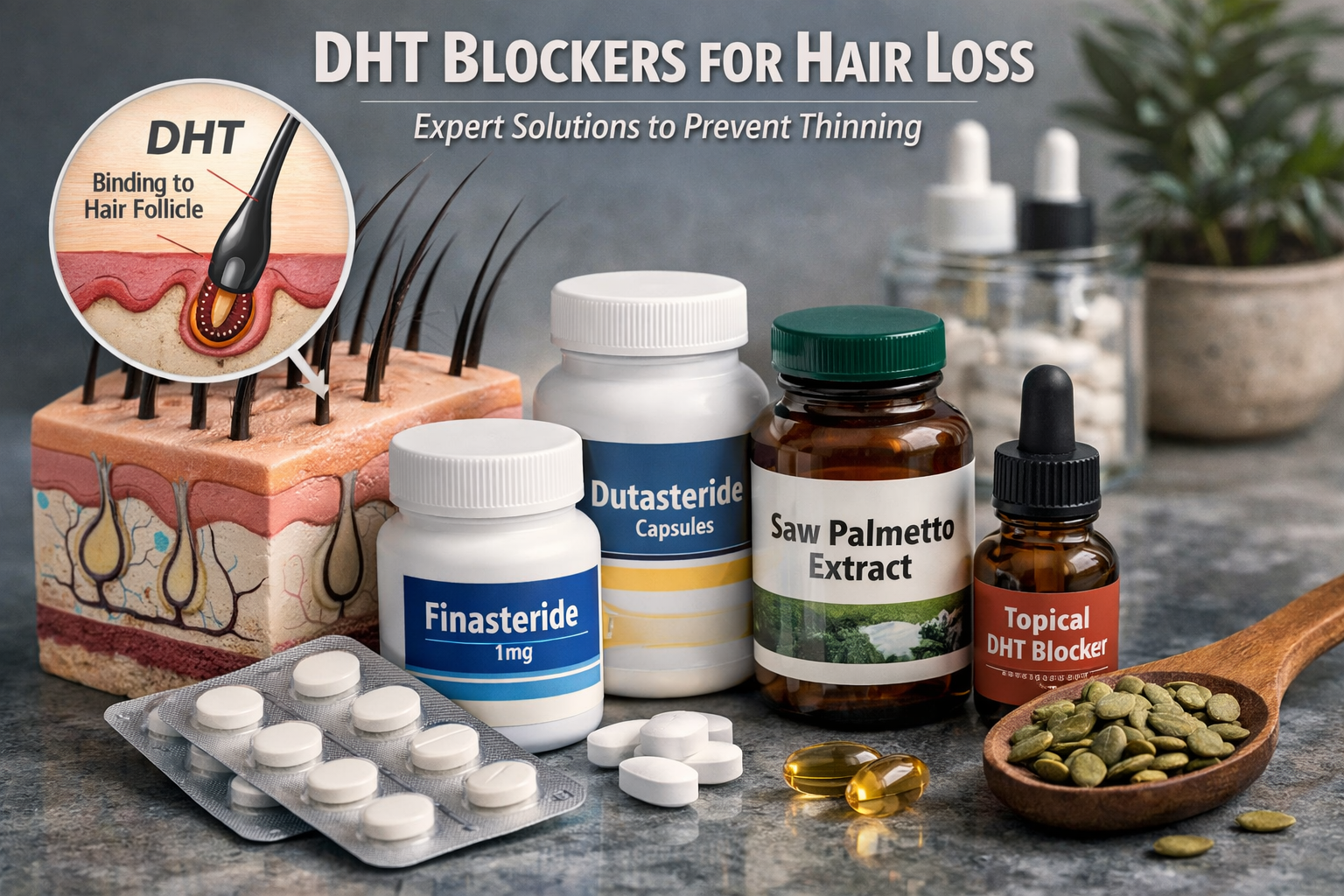
Hair loss is one of the most common concerns I see in my clinic, especially among men experiencing androgenetic alopecia. While hair transplant surgery offers a permanent and natural-looking solution, it is not a standalone fix. Long-term success depends heavily on managing the underlying cause of hair loss — and that is where DHT blockers come in.
In this comprehensive review, I will walk you through what DHT blockers are, how they work, the different types available, their effectiveness, potential side effects, and how they fit into a complete hair restoration strategy. This guide is written with both patients and informed readers in mind, offering clarity without oversimplifying the science.
Understanding DHT and Hair Loss
Dihydrotestosterone (DHT) is a derivative of testosterone, formed by the action of the enzyme 5-alpha reductase. While DHT plays an important role in male development, it is also the primary hormone responsible for male pattern baldness.
In individuals genetically predisposed to hair loss, DHT binds to receptors in the scalp — particularly in the frontal and crown areas. Over time, this leads to:
- Miniaturisation of hair follicles
- Shortening of the hair growth cycle
- Progressive thinning of hair strands
- Eventual follicle dormancy
The key point here is that DHT does not cause hair loss in everyone. It only affects those with a genetic sensitivity. This is why some men retain full hair density well into old age, while others begin thinning in their early twenties.
What Are DHT Blockers?
DHT blockers are treatments designed to reduce the production or activity of dihydrotestosterone in the body or scalp. They aim to slow, stop, or even partially reverse hair loss by protecting vulnerable follicles from hormonal damage.
There are two main categories:
- Pharmaceutical DHT blockers
- Natural or over-the-counter alternatives
Each has its place, and understanding their differences is crucial for choosing the right approach.
Pharmaceutical DHT Blockers
Finasteride
Finasteride is the most widely prescribed oral DHT blocker and remains the gold standard in medical hair loss treatment.
It works by inhibiting Type II 5-alpha reductase, significantly reducing DHT levels in the scalp and bloodstream. Clinical studies consistently show:
- Reduced hair loss progression in over 80% of men
- Noticeable regrowth in a significant proportion of users
- Stabilisation of hair density when taken long-term
From a hair transplant perspective, finasteride is often recommended both before and after surgery. It helps preserve existing hair, ensuring the transplanted area blends naturally over time.
Advantages:
- Strong clinical evidence
- Convenient once-daily tablet
- Effective for long-term maintenance
Considerations:
- Must be taken continuously to maintain results
- Some users report side effects such as reduced libido or mood changes
In my professional experience, side effects are relatively uncommon, but they should always be discussed with a qualified medical provider.
Dutasteride
Dutasteride is a more potent alternative that blocks both Type I and Type II 5-alpha reductase enzymes. This leads to a greater reduction in DHT levels compared to finasteride.
While not officially licensed for hair loss in some regions, it is often used off-label in more advanced cases.
Advantages:
- Stronger DHT suppression
- May be effective when finasteride is insufficient
Considerations:
- Higher likelihood of side effects due to broader hormonal impact
- Longer half-life, meaning it stays in the body for an extended period
For patients with aggressive hair loss or poor response to finasteride, dutasteride can be a valuable option — but it requires careful medical supervision.
Topical DHT Blockers
Topical solutions aim to reduce DHT directly at the scalp level, minimising systemic exposure.
Topical Finasteride
This formulation delivers finasteride locally to the scalp, reducing DHT where it matters most.
Benefits:
- Lower systemic absorption
- Reduced risk of side effects
- Suitable for patients hesitant about oral medication
Emerging evidence suggests it can be nearly as effective as oral finasteride when used consistently.
Combination Treatments
Many topical products combine DHT blockers with other active ingredients such as:
- Minoxidil (to stimulate blood flow and growth)
- Caffeine (to energise follicles)
- Ketoconazole (to reduce scalp inflammation and DHT activity)
These multi-action formulas are increasingly popular because they address hair loss from multiple angles.
Natural DHT Blockers
Natural alternatives are widely marketed, particularly to those seeking a gentler approach. While they are generally safer, their effectiveness is often less predictable.
Saw Palmetto
One of the most studied natural DHT blockers, saw palmetto is believed to inhibit 5-alpha reductase to a mild degree.
Pros:
- Fewer reported side effects
- Available in oral and topical forms
Cons:
- Less potent than pharmaceutical options
- Results vary significantly between individuals
Pumpkin Seed Oil
Some clinical studies suggest pumpkin seed oil may improve hair density when taken orally over several months.
Its mechanism is thought to involve mild DHT suppression combined with anti-inflammatory effects.
Other Ingredients
You may also encounter:
- Green tea extract
- Stinging nettle
- Pygeum bark
- Zinc
While these may support scalp health, their role as standalone DHT blockers is limited.
How Effective Are DHT Blockers?
Effectiveness depends on several factors:
- Stage of hair loss
- Genetic sensitivity
- Consistency of use
- Combination with other treatments
In general:
- Pharmaceutical blockers offer the most reliable results
- Topical solutions provide a balanced alternative
- Natural options may support early-stage hair loss but rarely stop progression alone
It is important to understand that DHT blockers do not work overnight. Most patients begin to see visible improvement after 4–6 months, with optimal results at 12 months or longer.
The Role of DHT Blockers in Hair Transplant Success
From a clinical perspective, hair transplant surgery alone is not a complete solution. In fact, without proper medical support, results may only be temporary.
A transplant works by relocating healthy, DHT-resistant follicles to thinning or balding areas. However, it does not prevent ongoing loss in the surrounding native hair. As a result, untreated hair can continue to weaken over time. Consequently, patients may notice uneven density or patchy results. In some cases, further procedures become necessary to restore balance.
For this reason, DHT blockers play a crucial role in long-term success. By reducing the impact of dihydrotestosterone on vulnerable follicles, they help stabilise the scalp environment. As a result, patients typically experience improved density retention and more consistent coverage. In addition, long-term outcomes tend to appear more natural. Perhaps most importantly, the likelihood of needing additional surgeries is significantly reduced.
In clinical practice, many patients are advised to begin DHT-blocking treatment before surgery. Continuing treatment afterward is equally important to maintain and protect the overall result.
Side Effects and Safety Considerations
Like any medical treatment, DHT blockers come with potential risks. However, understanding these risks helps patients make informed decisions.
Some commonly reported concerns include reduced libido, erectile dysfunction, and mood-related changes. In rare instances, individuals may also experience breast tenderness.
That said, several important points should be considered. Firstly, most side effects are reversible once treatment is stopped. Secondly, a large proportion of users report no adverse effects at all. Moreover, appropriate dosing and professional guidance can significantly reduce the likelihood of complications. For those who remain concerned, topical formulations offer an alternative with lower systemic absorption.
Who Should Use DHT Blockers?
In general, DHT blockers are most effective for men in the early to moderate stages of hair loss. They are also highly beneficial for individuals preparing for or recovering from a hair transplant. Furthermore, anyone looking to preserve existing hair density can benefit from incorporating them into their routine.
On the other hand, certain groups should approach these treatments with caution. For example, women of childbearing age are typically advised to avoid oral DHT blockers. Similarly, individuals with specific hormonal conditions should seek specialist advice before starting treatment. In addition, those unwilling to commit to consistent, long-term use may not achieve optimal results.
Ultimately, a personalised consultation remains the most reliable way to determine suitability.
Combining DHT Blockers with Other Treatments
While DHT blockers are highly effective, results are often enhanced when they are combined with complementary therapies. This integrated approach targets both the hormonal cause and the visible symptoms of hair loss.
Common combinations include topical or oral minoxidil, which stimulates hair growth and improves circulation. In addition, microneedling can enhance product absorption and promote follicle activity. Low-level laser therapy is another option, supporting cellular function within the scalp. Furthermore, platelet-rich plasma (PRP) treatments can boost regeneration by delivering concentrated growth factors directly to the follicles.
By combining these treatments, patients benefit from a more comprehensive strategy. As a result, outcomes are typically stronger, more stable, and longer-lasting.
Common Mistakes to Avoid
From years of clinical experience, I frequently see patients make avoidable errors:
- Stopping treatment too early
Results take time — consistency is key. - Expecting regrowth in completely bald areas
DHT blockers preserve and strengthen existing follicles; they do not revive dead ones. - Relying solely on natural remedies
These may help, but rarely halt progression alone. - Skipping medical advice
Self-prescribing without guidance can lead to poor outcomes.
Final Thoughts: Are DHT Blockers Worth It?
In my professional opinion, DHT blockers are one of the most important tools in modern hair restoration. Whether you are considering a transplant or simply want to maintain your current hair, they form the foundation of any effective treatment plan.
Pharmaceutical options like finasteride and dutasteride offer the strongest results, while topical and natural alternatives provide flexibility for those with different preferences or tolerances.
The key takeaway is this: hair loss is progressive, but it is also manageable. With the right approach, you can slow it down, preserve what you have, and achieve natural, long-lasting results.
Conclusion
DHT blockers are not a miracle cure, but they are a scientifically proven solution for managing hair loss at its root cause. When used correctly and consistently, they can make a significant difference — both on their own and as part of a comprehensive hair restoration strategy.
If you are serious about addressing hair loss, understanding and incorporating DHT blockers into your routine is not optional — it is essential.