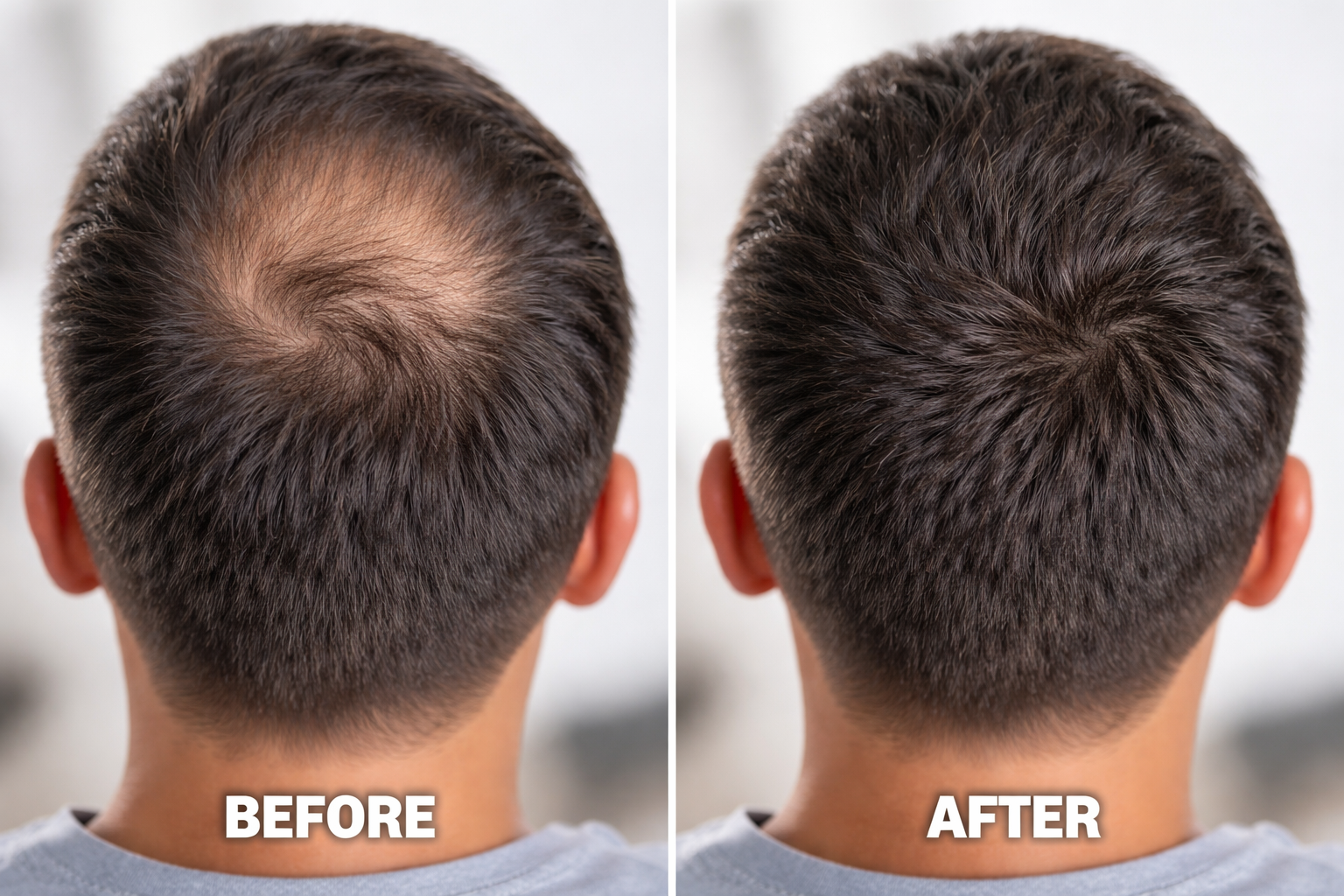
Hair loss at the crown — also known as the vertex — is one of the most common and frustrating types of male pattern baldness. Unlike a receding hairline, crown thinning can be harder to conceal and often gives the impression of more advanced hair loss. For many people, a hair crown transplant offers a reliable, long-term solution.
As a hair transplant specialist with years of experience treating crown baldness, I’ve seen how transformative a well-planned crown restoration can be. However, the crown is also one of the most technically demanding areas of the scalp to restore successfully. This detailed review explains everything you should know about hair crown transplants, including how they work, who they are suitable for, what results to expect, and the potential challenges.
Understanding Crown Hair Loss
The crown sits at the top rear section of the scalp where hair naturally grows in a spiral pattern called a whorl. This region is highly susceptible to androgenetic alopecia, also known as male pattern baldness.
Hair loss in this area typically begins as a small thinning spot and gradually expands outward. In the early stages, it may only be noticeable under bright lighting or when the hair is wet. Over time, the thinning can progress into a clearly visible bald patch.
Several factors contribute to crown hair loss:
-
Genetic predisposition
-
Hormonal sensitivity to DHT
-
Age
-
Overall pattern of androgenetic alopecia
-
Hair shaft miniaturisation
One important point to understand is that crown hair loss often appears later than frontal hairline recession but can progress steadily once it begins.
What Is a Hair Crown Transplant?
A hair crown transplant is a surgical procedure designed to restore hair density in the vertex area of the scalp by transplanting healthy hair follicles from the donor region — usually the back or sides of the head.
These donor follicles are resistant to the hormone responsible for pattern baldness. Once transplanted into the crown, they continue to grow naturally for life.
Modern crown transplants typically use one of two techniques:
FUE (Follicular Unit Extraction)
Individual follicular units are extracted one by one from the donor area and implanted into the crown.
FUT (Follicular Unit Transplantation)
A strip of scalp is removed from the donor region and dissected into follicular grafts before implantation.
Most modern clinics prefer FUE for crown work due to the flexibility in graft placement and minimal scarring.
Why the Crown Is One of the Hardest Areas to Transplant
Many patients assume restoring the crown is similar to restoring the hairline. In reality, crown transplants require far more planning and surgical precision.
There are several reasons for this.
The Natural Whorl Pattern
Hair in the crown does not grow straight forward like the hairline. Instead, it forms a circular pattern that radiates outward from a central point.
Recreating this natural swirl requires careful graft angulation and direction. If the surgeon fails to replicate the natural growth pattern, the result can appear unnatural.
Larger Surface Area
The crown can cover a much larger area than patients realise. Even a moderate bald spot may require a large number of grafts to create adequate coverage.
This is why crown restoration often demands significant donor hair reserves.
Density Illusion
The crown sits on a flatter part of the scalp where hair tends to separate more easily. This means it typically requires more grafts per square centimetre to achieve the illusion of fullness.
Who Is a Good Candidate for a Crown Hair Transplant?
Not every person with crown thinning is an ideal candidate for surgery. A thorough consultation is essential to determine suitability.
Good candidates typically have:
-
Stable hair loss pattern
-
Adequate donor hair density
-
Realistic expectations
-
Good scalp health
-
Progressive crown thinning rather than temporary shedding
Age can also play a role. Younger patients under 25 are often advised to wait because their hair loss pattern may still evolve.
In many cases, surgeons prioritise restoring the hairline and mid-scalp before addressing the crown. This is because the front of the scalp frames the face and generally has greater cosmetic impact.
How Many Grafts Are Needed for a Crown Transplant?
The number of grafts required varies depending on the size of the bald area and the desired density.
Typical estimates include:
-
Small crown thinning: 800–1200 grafts
-
Moderate crown baldness: 1200–2000 grafts
-
Large crown bald patch: 2000–3000+ grafts
Because the crown often requires a large graft count, surgeons must carefully manage the donor supply to ensure future hair loss can also be addressed if necessary.
A conservative and strategic approach is always recommended.
The Crown Transplant Procedure Step by Step
The process for a crown hair transplant generally follows several key stages.
1. Consultation and Planning
During the consultation, the surgeon assesses:
-
The size of the crown bald spot
-
Hair loss progression
-
Donor hair availability
-
Hair characteristics such as thickness and curl
The design of the crown swirl is carefully mapped to ensure natural growth patterns.
2. Donor Hair Extraction
On the day of surgery, the donor area is trimmed and local anaesthetic is administered.
Using the FUE technique, follicular units are extracted individually with a micro punch tool. Each graft usually contains one to four hairs.
3. Crown Site Creation
Tiny recipient sites are created in the crown area using specialised blades or needles. The angle and direction of these incisions determine the final growth pattern.
Creating a natural spiral is one of the most critical parts of crown restoration.
4. Graft Implantation
The harvested grafts are then carefully implanted into the prepared sites. Technicians or the surgeon place each follicle according to the planned density and direction.
The procedure typically lasts between 6 and 8 hours depending on graft numbers.
Recovery After a Crown Hair Transplant
Recovery from a crown transplant is generally straightforward.
Most patients can return to normal non-physical activities within a few days.
Common recovery milestones include:
First Week
Small scabs form around each transplanted graft. These usually fall off naturally within 7 to 10 days.
Two to Four Weeks
The transplanted hairs often shed in a process called shock loss. This is completely normal.
Three to Four Months
New hair growth begins emerging from the transplanted follicles.
Six to Nine Months
Hair density increases and the crown begins to look fuller.
Twelve Months
Final results are typically visible.
Because crown hair grows in a circular pattern, results can sometimes take slightly longer to mature compared to hairline transplants.
Expected Results from Crown Restoration
When performed by an experienced surgeon, crown transplants can produce highly natural results.
Patients typically experience:
-
Improved hair coverage
-
Reduction of visible scalp
-
Natural swirl pattern
-
Permanent hair growth
However, the goal is often coverage rather than extremely high density. Attempting to recreate the density of teenage hair can exhaust donor supply and lead to unnatural results.
A balanced approach ensures the crown looks fuller while preserving donor hair for future needs.
Crown Transplants vs Non-Surgical Treatments
Some patients may benefit from non-surgical options before considering a transplant.
Medications
Certain medications can slow or stabilise hair loss.
Common options include:
-
Finasteride
-
Minoxidil
These treatments may improve crown density in early stages but typically cannot restore large bald areas.
PRP Therapy
Platelet-rich plasma injections can stimulate hair follicles and improve hair thickness. PRP is often used alongside hair transplant procedures to enhance healing and growth.
Micropigmentation
Scalp micropigmentation creates the appearance of hair follicles using medical pigments. It can be used to enhance crown density visually, though it does not restore real hair.
Potential Challenges with Crown Transplants
While crown restoration can be highly successful, there are some challenges to consider.
Higher Graft Demand
The crown often requires many grafts to produce visible improvement.
Future Hair Loss
If surrounding native hair continues to thin, additional procedures may be needed.
Growth Direction Complexity
Recreating the natural swirl requires a highly skilled surgeon.
This is why choosing an experienced clinic is critical.
Cost of a Hair Crown Transplant in the UK
Hair transplant pricing varies depending on several factors:
-
Number of grafts required
-
Clinic reputation
-
Surgeon experience
-
Technology used
Typical UK price ranges include:
-
Small crown transplant: £3,000 – £5,000
-
Medium crown restoration: £5,000 – £7,000
-
Large crown transplant: £7,000 – £10,000+
Some patients explore treatment abroad where costs may be lower, but careful research is essential to ensure safety and quality standards.
Choosing the Right Surgeon for Crown Restoration
Selecting the right surgeon can make a significant difference in crown transplant outcomes.
Important factors to evaluate include:
-
Surgeon experience with crown cases
-
Before-and-after patient results
-
Medical qualifications
-
Consultation transparency
-
Patient reviews
An experienced surgeon will prioritise long-term hair planning rather than performing aggressive graft placement that may compromise future options.
Long-Term Maintenance After a Crown Transplant
Transplanted hair follicles are permanent, but surrounding native hair may continue to thin over time.
Many patients maintain results using:
-
Hair loss medications
-
PRP treatments
-
Healthy scalp care routines
Regular follow-ups with the clinic can help monitor hair stability and maintain the best possible outcome.
Common Myths About Crown Hair Transplants
Several misconceptions exist about crown restoration.
Myth 1: Crown hair grows differently after transplant
In reality, transplanted follicles grow exactly like they did in the donor area.
Myth 2: Crown transplants look unnatural
When performed correctly, the natural swirl pattern can be recreated very convincingly.
Myth 3: One transplant always solves crown baldness
In some cases, a second procedure may be required to increase density.
Final Thoughts
Hair crown transplants can dramatically improve the appearance of thinning or balding at the vertex, restoring both hair coverage and personal confidence. However, the crown is one of the most technically challenging areas of the scalp to treat successfully.
Achieving natural results requires careful surgical planning, artistic understanding of hair growth patterns, and a conservative approach to donor hair management.
For patients experiencing progressive crown thinning, consulting an experienced hair transplant specialist is the best first step. With the right strategy and expectations, crown restoration can deliver long-lasting, natural-looking results that continue to grow for years to come.