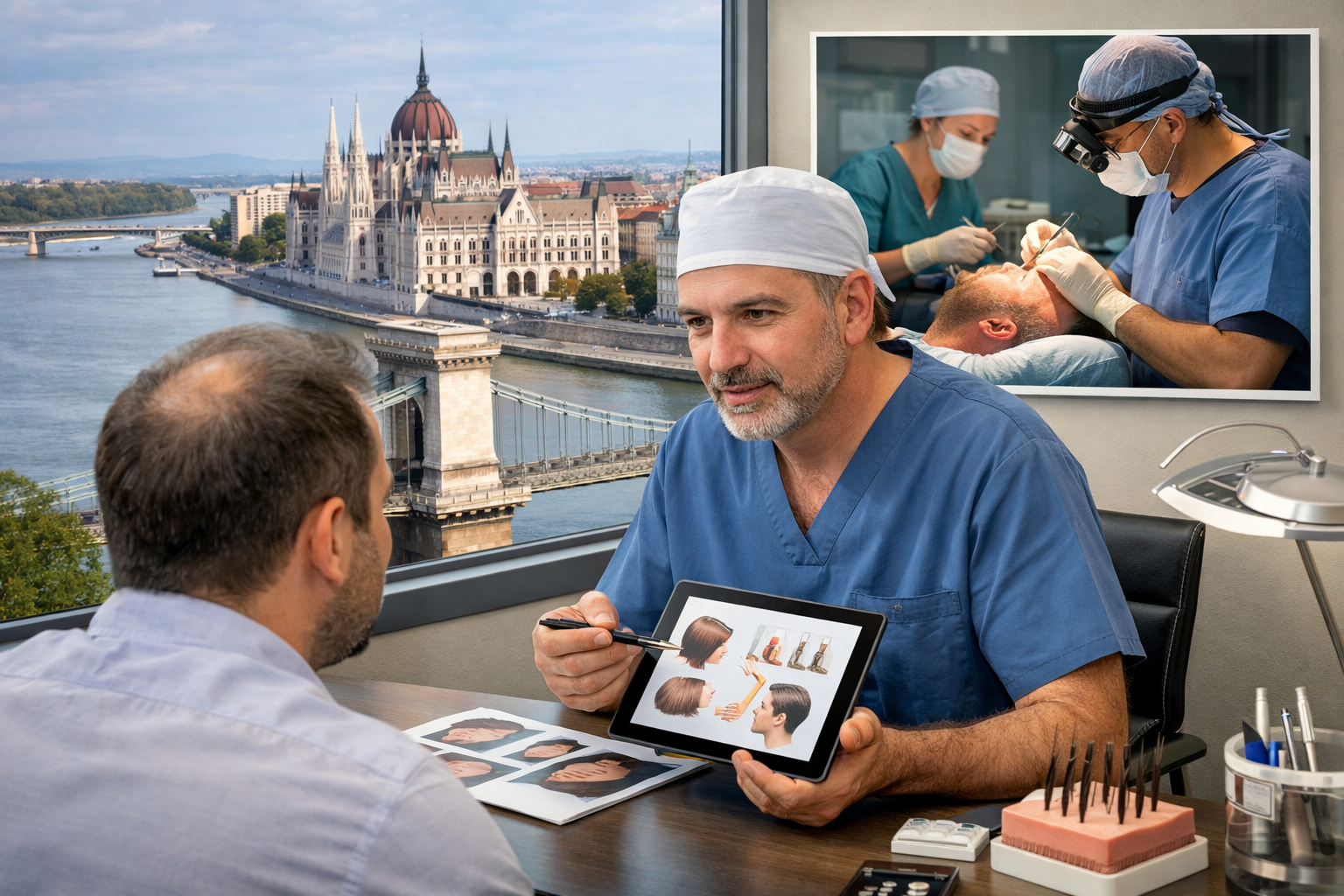
Budapest has quietly become one of Europe’s most sought-after destinations for advanced hair restoration treatment. Over the past decade, I have observed a significant increase in patients travelling from the UK and across Europe to Hungary for hair transplant procedures. The combination of experienced surgeons, modern facilities, and competitive pricing has positioned Budapest as a respected centre for medical tourism.
As a hair transplant expert, this review provides a detailed and professional evaluation of hair restoration treatment in Budapest, covering techniques, standards of care, patient journey, results, risks, and whether travelling abroad is the right decision for you.
Why Budapest Has Become a Hair Transplant Hub
Budapest, the capital of Budapest, has built a strong reputation in aesthetic medicine. Hungary has long been recognised for its excellence in medical education and surgical training. Many Hungarian surgeons receive international training and participate in global conferences on hair restoration.
Several factors contribute to Budapest’s growing appeal:
-
High surgical standards
-
Modern, well-equipped clinics
-
Significantly lower costs compared to the UK
-
English-speaking medical teams
-
Short flight time from London (approximately 2.5 hours)
For UK patients seeking value without compromising on expertise, Budapest presents a compelling option.
Overview of Hair Restoration Treatment
Hair restoration in Budapest follows the same medical principles used in leading UK and European clinics. The core objective is permanent redistribution of healthy hair follicles from the donor area to thinning or bald regions.
The most common indication is androgenetic alopecia (male or female pattern hair loss). In these cases, follicles at the back and sides of the scalp are genetically resistant to DHT. When transplanted to balding areas, they retain this resistance and continue to grow naturally.
The transplanted hair:
-
Grows permanently
-
Can be cut, styled, and washed normally
-
Ages naturally over time
-
Requires no special maintenance beyond routine care
Techniques Used in Budapest Clinics
Modern clinics in Budapest primarily offer FUE and, in selected cases, FUT procedures.
Follicular Unit Extraction (FUE)
FUE is currently the dominant technique in Budapest.
In this minimally invasive method:
-
Individual follicular units are extracted using a micro-punch device.
-
Tiny recipient sites are created in the balding area.
-
Grafts are implanted following natural hair growth direction.
Advantages include:
-
No linear scar
-
Faster healing
-
Minimal post-operative discomfort
-
Natural-looking results
-
Suitable for shorter hairstyles
Budapest clinics often utilise advanced implanter pens and sapphire blade technology to enhance precision.
Follicular Unit Transplantation (FUT)
While less common today, FUT remains available in some clinics for patients requiring a very high graft count.
In FUT:
-
A strip of donor scalp is removed.
-
Follicles are dissected under magnification.
-
Grafts are implanted into the recipient area.
FUT may be beneficial for:
-
Advanced baldness
-
Patients with excellent scalp laxity
-
Those seeking maximum graft yield in one session
However, it leaves a linear scar and requires slightly longer recovery.
Quality of Care and Standards in Hungary
Hungary maintains regulated healthcare standards within the European Union framework. Reputable clinics in Budapest operate under strict hygiene and surgical safety protocols.
Key indicators of a high-quality clinic include:
-
Qualified medical doctors performing extractions and incisions
-
Sterile surgical environments
-
Detailed consultation process
-
Transparent pricing structure
-
Structured aftercare plan
-
Clear communication in English
When assessing a clinic, ensure the surgeon—not technicians—performs the critical surgical steps.
The Patient Journey: What to Expect
Initial Consultation
Most Budapest clinics offer online consultations for international patients. You submit photographs and medical history for evaluation. A treatment plan is then created outlining:
-
Estimated graft number
-
Proposed hairline design
-
Expected density
-
Total cost
-
Duration of procedure
Arrival in Budapest
Many clinics assist with:
-
Airport transfers
-
Hotel recommendations
-
Translators (if required)
Procedure Day
Hair transplant surgery typically lasts 6 to 8 hours and is performed under local anaesthetic. Patients remain awake and comfortable throughout.
Aftercare and Return to the UK
Patients usually stay in Budapest for 2 to 3 nights before flying home. Detailed aftercare instructions are provided, including washing guidance and medication if required.
Recovery Timeline
Hair restoration recovery in Budapest follows the standard biological process:
-
Days 1–3: Redness and mild swelling.
-
Days 4–7: Formation and shedding of small scabs.
-
Weeks 2–4: Shock loss (temporary shedding of transplanted hairs).
-
Months 3–4: Initial regrowth begins.
-
Months 6–9: Noticeable thickening.
-
Months 12–15: Final results fully mature.
The waiting phase requires patience. Full density does not appear overnight.
Natural Results: What Determines Success?
The difference between an average result and an exceptional one lies in surgical planning and artistry.
Key elements include:
-
Hairline design appropriate to age and facial structure
-
Proper angulation of grafts
-
Strategic density placement
-
Preservation of donor area for future needs
-
Avoiding overharvesting
Budapest clinics with experienced surgeons are capable of producing highly natural outcomes indistinguishable from native hair.
Cost Comparison: Budapest vs UK
One of the strongest motivators for travelling to Hungary is cost.
In the UK, hair transplant procedures typically range between £4,000 and £12,000 depending on graft count and clinic reputation.
In Budapest, similar procedures often range between £2,000 and £5,500.
Lower operational costs and favourable economic conditions allow Hungarian clinics to offer competitive pricing while maintaining quality standards.
However, patients should avoid choosing purely based on price. Extremely low-cost offers may indicate high-volume, technician-led models.
Risks of Medical Tourism
Travelling abroad for surgery requires careful consideration.
Potential risks include:
-
Limited long-term follow-up
-
Difficulty managing complications from the UK
-
Communication misunderstandings
-
Overly aggressive graft numbers
-
Inconsistent aftercare
To minimise risk:
-
Research surgeon credentials thoroughly
-
Request before-and-after results
-
Confirm who performs each stage of surgery
-
Ensure post-operative communication is available
Ideal Candidates for Treatment in Budapest
You may be a suitable candidate if you:
-
Have stable pattern hair loss
-
Possess sufficient donor density
-
Are in good general health
-
Have realistic expectations
-
Understand future hair loss progression
Younger patients should approach surgery cautiously and ensure long-term planning is part of the consultation.
Psychological Impact of Hair Restoration
Hair loss can affect confidence, self-image, and professional presence. Many patients who travel to Budapest report not only physical transformation but emotional improvement.
Common feedback includes:
-
Increased confidence in social situations
-
Reduced self-consciousness
-
Improved satisfaction with photographs
-
Greater ease in styling hair
It is important, however, to maintain realistic expectations. Hair restoration enhances appearance—it does not create perfection.
Longevity of Results
Transplanted hair is permanent. Once follicles establish blood supply, they grow for life.
However, native hair surrounding transplanted areas may continue thinning. Some patients choose:
-
Preventative medication
-
PRP therapy
-
Future top-up sessions
A well-designed transplant in Budapest should account for long-term hair loss progression.
Red Flags to Watch For
When researching clinics in Budapest, be cautious of:
-
Guaranteed results claims
-
Unrealistically low prices
-
Lack of surgeon involvement
-
No in-person assessment on arrival
-
Aggressive marketing without medical transparency
Professional clinics focus on patient education rather than sales pressure.
Is Travelling to Budapest Worth It?
For many UK patients, the answer is yes—provided careful research is undertaken.
Budapest offers:
-
Skilled surgeons
-
Modern techniques
-
Competitive pricing
-
Accessible location
-
Strong reputation in medical tourism
However, the decision should be based on quality of care, not solely cost savings.
Final Expert Opinion
Hair restoration treatment in Budapest, Hungary, can deliver excellent, natural, and permanent results when performed by experienced professionals in reputable clinics.
The city has firmly established itself as a credible European centre for hair transplantation. With advanced FUE techniques, skilled surgical teams, and structured patient pathways, Budapest offers a high standard of care for international patients.
For UK residents considering treatment abroad, Budapest represents a balanced option: affordability combined with expertise.
Hair transplantation is both medical science and aesthetic artistry. When properly planned and executed, it restores not just hair—but confidence, self-image, and long-term satisfaction.
If you are considering treatment in Budapest, prioritise surgeon experience, ethical consultation, and realistic planning. A carefully chosen clinic can provide results that look entirely natural and last a lifetime.