Hair transplantation has become one of the most effective and reliable solutions for treating hair loss. With modern surgical techniques and improved technology, patients can now achieve natural-looking results that were difficult to imagine a few decades ago. However, many people researching hair transplant procedures often come across two commonly used terms: hair and graft.
Although these terms are related, they are not the same. Understanding the difference between hair and graft is essential when evaluating treatment plans, comparing clinics, or estimating the number of grafts required for successful hair restoration.
This article explains the concept of hair versus graft in hair transplantation, how grafts are counted, how they affect the final result, and why understanding this distinction is crucial before undergoing a hair transplant procedure.
What Is a Hair in Hair Transplantation?
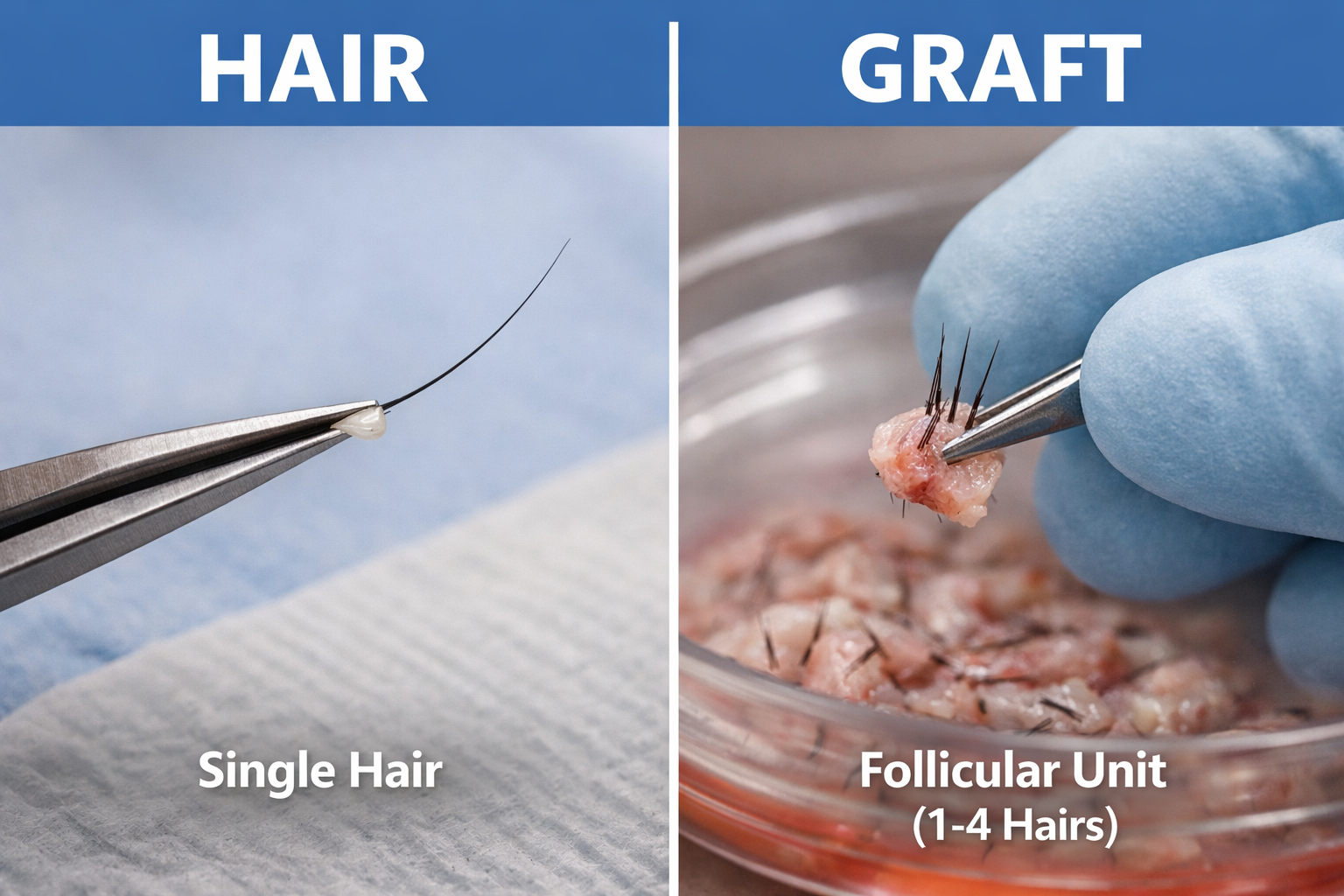
In the context of hair transplantation, a hair refers to an individual strand that grows from the scalp. Each hair shaft emerges from a hair follicle embedded beneath the skin. The follicle is responsible for producing and maintaining hair growth through different phases of the hair growth cycle.
Human hair does not grow individually in isolation. Instead, hair grows in naturally occurring clusters known as follicular units. These units contain one to four hairs, and sometimes even five hairs in rare cases. Because of this natural grouping, hair transplant procedures typically work with follicular units rather than single hairs.
When a patient hears that a procedure will transplant 3,000 hairs, it refers to the number of individual strands expected to grow after the procedure. However, surgeons rarely transplant hairs individually. Instead, they transplant grafts containing multiple hairs.
What Is a Graft in Hair Transplantation?
A graft is a small piece of scalp tissue that contains one or more hair follicles. Each graft represents a follicular unit that is extracted from the donor area and implanted into the recipient area.
Hair transplant surgeons usually harvest grafts from the back or sides of the scalp, where hair is genetically resistant to the hormone responsible for male pattern baldness. These donor grafts are then carefully implanted into thinning or bald areas to restore natural hair density.
A single graft can contain:
-
1 hair
-
2 hairs
-
3 hairs
-
4 hairs (occasionally more)
Therefore, when clinics discuss the number of grafts required for a procedure, they are referring to follicular units rather than individual hair strands.
For example:
-
2,000 grafts may contain between 4,000 and 5,000 hairs, depending on the average number of hairs per graft.
This distinction is essential because it directly affects the visual density of the final hair transplant result.
The Natural Structure of Follicular Units
To fully understand the difference between hair and graft, it is helpful to look at how hair naturally grows on the scalp.
Hair follicles are grouped into follicular units, which are natural anatomical structures consisting of:
-
1 to 4 hair follicles
-
sebaceous glands
-
connective tissue
-
small muscles that allow hair to stand up
These follicular units are the building blocks of hair transplantation. Modern techniques such as FUE (Follicular Unit Extraction) and FUT (Follicular Unit Transplantation) are designed to preserve these units intact.
By transplanting follicular units rather than individual follicles, surgeons can recreate the natural appearance of hair growth.
Hair vs Graft: The Key Differences
The difference between hair and graft becomes clearer when we compare their characteristics in hair transplantation.
Definition
Hair refers to a single strand growing from a follicle.
Graft refers to a follicular unit containing one or more hairs.
Measurement in Transplant Planning
Hair transplant procedures are usually planned based on the number of grafts, not individual hairs.
This is because grafts represent the natural units extracted and implanted during surgery.
Impact on Density
Hair density depends on:
-
the number of grafts transplanted
-
the number of hairs contained in each graft
-
the placement and distribution of grafts
A transplant of 3,000 grafts with an average of 2.5 hairs per graft could produce around 7,500 hairs.
Surgical Handling
Surgeons handle grafts during extraction and implantation, not individual hairs. Each graft must be preserved carefully to ensure the survival of the follicles inside it.
Why Clinics Use Graft Counts Instead of Hair Counts
Most reputable hair transplant clinics describe procedures using graft numbers rather than hair counts. There are several important reasons for this practice.
Surgical Accuracy
During extraction and implantation, surgeons work with grafts rather than individual hairs. Counting grafts allows for accurate surgical planning and documentation.
Standardisation in the Industry
Graft counting has become the standard method used worldwide to describe hair transplant procedures. It ensures consistency between clinics, surgeons, and patients.
Realistic Expectations
If clinics only mention hair counts, patients might misunderstand how many grafts are actually being transplanted. Since each graft contains multiple hairs, graft numbers provide a clearer representation of the procedure.
Average Number of Hairs per Graft
Not all grafts contain the same number of hairs. The average number of hairs per graft varies from person to person.
Typical distribution includes:
-
Single-hair grafts: 10–15%
-
Two-hair grafts: 40–50%
-
Three-hair grafts: 30–40%
-
Four-hair grafts: 5–10%
Overall, the average is usually around 2 to 2.5 hairs per graft.
This means a transplant involving 2,500 grafts could produce approximately 5,000 to 6,250 hairs.
Patients with naturally thicker hair or higher hair density in the donor area may have grafts containing more hairs, which can improve the final visual density.
How Hair and Graft Numbers Affect the Final Result
The success of a hair transplant does not depend only on the number of grafts. Instead, several factors influence the final outcome.
Donor Hair Quality
The donor area’s hair characteristics play a major role. Thick hair strands provide better scalp coverage than fine hair, even if the number of grafts is the same.
Hair Colour and Skin Contrast
Patients with hair colour similar to their skin tone often achieve better visual density. High contrast between hair and skin can make thinning areas more noticeable.
Curl and Texture
Curly or wavy hair tends to create more coverage than straight hair. This means fewer grafts may be needed to achieve a dense appearance.
Placement and Angle
Proper graft placement and natural angles are essential for creating realistic hairlines and natural hair growth patterns.
Hairline Design and Graft Allocation
When performing a hair transplant, surgeons do not distribute grafts randomly. Instead, they strategically allocate grafts depending on the area being treated.
Single-Hair Grafts for Hairline
The front hairline typically requires single-hair grafts to create a soft and natural transition.
Multi-Hair Grafts for Density
Behind the hairline, surgeons use grafts containing two, three, or four hairs to increase density and coverage.
This careful distribution allows surgeons to recreate natural hair growth patterns and maximise the visual impact of the transplant.
Hair vs Graft in Different Hair Transplant Techniques
Modern hair transplantation primarily uses two surgical techniques.
FUE (Follicular Unit Extraction)
FUE involves extracting individual follicular units directly from the donor area using a small punch tool.
Each extracted unit is a graft containing one or more hairs.
Advantages of FUE include:
-
minimal scarring
-
faster recovery
-
natural results
-
flexibility in harvesting grafts
FUT (Follicular Unit Transplantation)
FUT involves removing a small strip of scalp tissue from the donor area. The strip is then dissected into individual grafts under a microscope.
These grafts are later implanted into the recipient area.
FUT can sometimes yield a larger number of grafts in a single session, but it leaves a linear scar in the donor region.
Both methods rely on the transplantation of follicular unit grafts rather than individual hairs.
How Many Grafts Are Needed for a Hair Transplant?
The number of grafts required depends on several factors:
-
the extent of hair loss
-
the size of the recipient area
-
donor hair density
-
hair characteristics
Typical ranges include:
| Hair Loss Level | Estimated Grafts |
|---|---|
| Mild recession | 1,000 – 1,500 |
| Moderate thinning | 2,000 – 3,000 |
| Advanced hair loss | 3,500 – 5,000+ |
These numbers can vary depending on the patient’s goals and the surgeon’s strategy.
Common Misunderstandings About Hair and Grafts
Many patients researching hair transplantation misunderstand the relationship between hairs and grafts. Some common misconceptions include the following.
More Grafts Always Mean Better Results
Although a higher number of grafts can increase density, quality and placement are just as important as quantity.
One Graft Equals One Hair
This is incorrect. A graft can contain multiple hairs.
Clinics Advertising Hair Numbers Are More Generous
Sometimes clinics advertise procedures using hair counts instead of graft counts to make the numbers appear larger. For example, promoting “10,000 hairs” instead of “4,000 grafts”.
Understanding this difference helps patients evaluate treatment plans more accurately.
Importance of Donor Area Management
The donor area contains a limited number of grafts that can safely be harvested. Overharvesting can lead to visible thinning or scarring.
A skilled hair transplant surgeon carefully plans graft extraction to ensure:
-
long-term donor preservation
-
natural density in the donor area
-
availability of grafts for potential future procedures
Responsible donor management is essential for achieving sustainable hair restoration.
Long-Term Growth After Hair Transplantation
After transplantation, grafts enter a temporary resting phase. Most transplanted hairs shed within the first few weeks, which is a normal part of the process.
New hair growth typically begins within three to four months, with visible improvement over time.
Full results usually appear after 12 to 15 months, when the transplanted follicles complete their growth cycle and produce permanent hair.
Because grafts are taken from genetically resistant areas, the transplanted hair generally continues growing for a lifetime.
Why Understanding Hair vs Graft Matters for Patients
Understanding the difference between hair and graft helps patients make informed decisions when researching hair transplantation.
It allows them to:
-
compare treatment plans between clinics
-
understand graft estimates
-
set realistic expectations for density and coverage
-
evaluate marketing claims more critically
Patients who understand these concepts are better prepared to discuss treatment options with surgeons and participate actively in their hair restoration journey.
Conclusion
Hair transplantation has evolved significantly, offering effective and natural solutions for individuals experiencing hair loss. One of the most important concepts to understand before undergoing treatment is the difference between hair and graft.
A hair refers to an individual strand growing from the scalp, while a graft represents a follicular unit containing one or more hair follicles. Because hair grows in natural groupings, modern hair transplant procedures transplant grafts rather than individual hairs.
The number of grafts used during a procedure plays a crucial role in determining the final density and coverage. However, successful hair restoration also depends on several additional factors, including donor hair quality, surgical technique, and careful graft placement.
By understanding how hairs and grafts relate to each other, patients can better evaluate treatment plans and set realistic expectations for their results. Ultimately, a well-planned hair transplant performed by an experienced surgeon can restore not only hair but also confidence and quality of life.