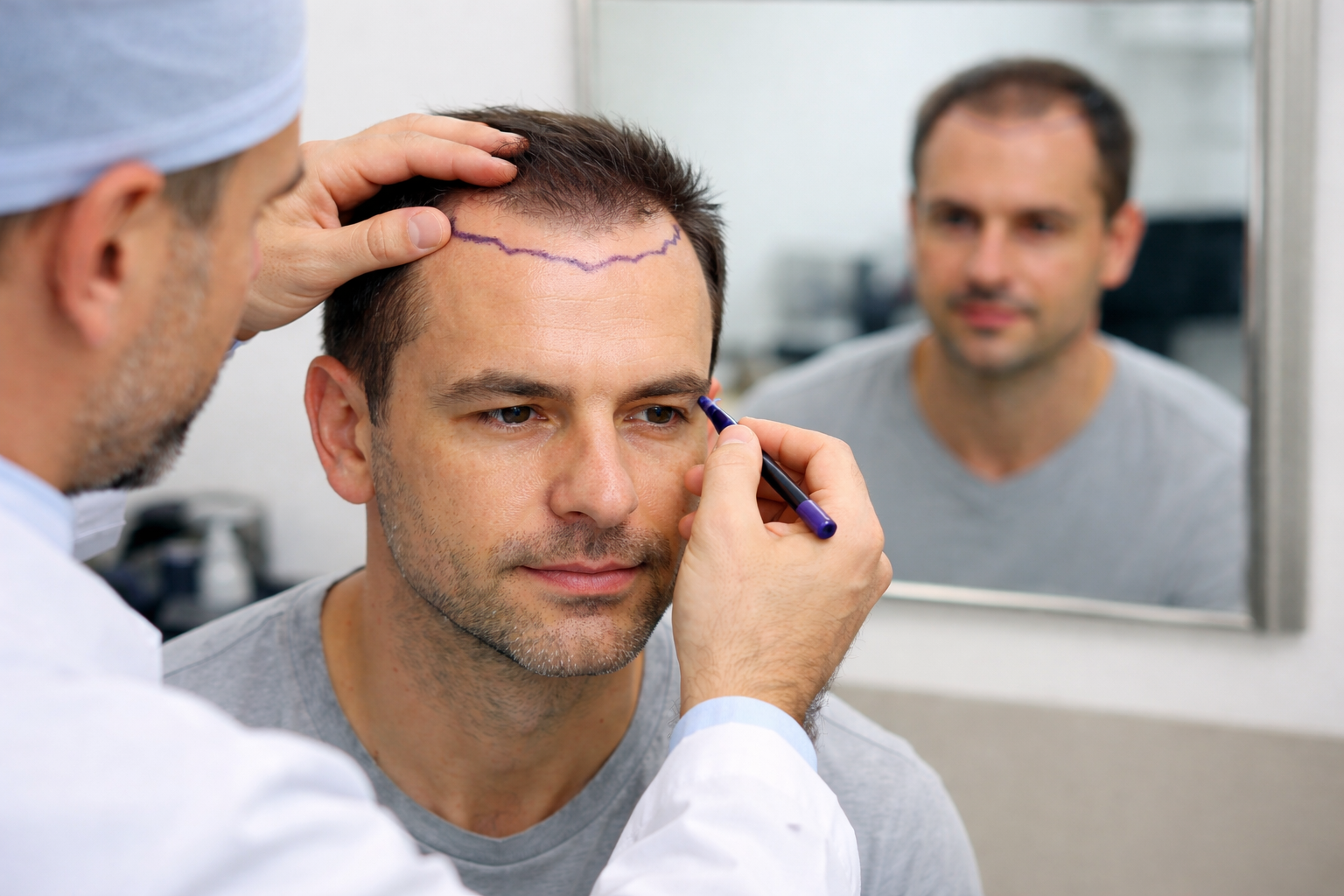
Hair transplantation has evolved significantly over the past two decades. Modern techniques allow surgeons to recreate natural density and restore confidence for individuals experiencing hair loss. However, among all aspects of a successful hair transplant, hairline design remains the most critical and artistic step of the entire procedure.
A poorly designed hairline can make even the most technically perfect transplant look unnatural. Conversely, a carefully planned hairline can transform the entire appearance of the face and provide results that age naturally over time.
This review explores the importance of hairline design, the science behind it, and the factors that experienced hair transplant specialists consider when creating a natural hairline.
Understanding the Role of Hairline Design
Hairline design is the process of determining the shape, position, density, and pattern of the transplanted hairline before a hair transplant procedure begins.
The hairline frames the face. It influences how youthful, balanced, and natural a person appears. Because of this, designing the hairline is not simply a technical step—it is both a medical and artistic decision.
A well-designed hairline must achieve several objectives:
-
Look completely natural from all angles
-
Match the patient’s facial proportions
-
Preserve donor hair for future hair loss
-
Age naturally over time
-
Blend seamlessly with existing hair
In expert hands, the hairline should be virtually undetectable, even under close inspection.
Why Hairline Design Determines the Success of a Hair Transplant
Many patients focus on graft numbers when researching hair transplant procedures. While graft count is important, the design of the hairline often matters far more than the number of grafts used.
If the hairline is placed too low, too straight, or too dense, the result can appear artificial. Correcting such mistakes later can be extremely difficult and may require additional surgeries.
An experienced surgeon understands that hairline design must consider both current appearance and future hair loss progression. A hairline that looks ideal today should still appear natural 10, 20, or even 30 years later.
For this reason, ethical hair transplant specialists prioritise long-term planning over aggressive, unrealistic hairline placement.
The Natural Anatomy of the Hairline
To recreate a convincing hairline, surgeons must first understand how natural hairlines grow.
A natural hairline is not a straight line. Instead, it consists of irregular micro-patterns that vary slightly from person to person.
Key characteristics include:
1. Irregularity
Natural hairlines contain subtle irregularities and asymmetry. Small variations in height and direction create a soft transition between the forehead and hair.
Artificial hairlines often appear too symmetrical or straight, which immediately reveals that a transplant has been performed.
2. Gradual Density Transition
In nature, the frontal hairline begins with very fine hairs. Density gradually increases as the hair moves further back into the scalp.
This transition zone is essential for a natural look.
3. Single Hair Follicles at the Front
The very front of the hairline consists mostly of single-hair follicular units. Multi-hair grafts are typically placed slightly behind the leading edge to increase density.
4. Direction and Angle of Growth
Hair naturally exits the scalp at very shallow angles in the frontal region. If grafts are implanted at incorrect angles, the hair may grow upright, creating an unnatural appearance.
Factors That Influence Hairline Design
Hairline planning must be personalised for every patient. No two hairlines should ever be identical.
Experienced surgeons evaluate several factors before determining the ideal design.
Facial Structure
The hairline should complement the patient’s facial proportions. Forehead height, brow position, and facial symmetry all influence where the hairline should begin.
A well-balanced hairline enhances the overall harmony of the face.
Age of the Patient
Age plays a critical role in hairline placement.
Younger patients often request very low hairlines, but responsible surgeons avoid overly aggressive designs. As people age, the hairline naturally recedes slightly. A hairline designed too low can appear unnatural later in life.
For most patients, a mature hairline that sits slightly higher than a teenage hairline produces the most natural long-term outcome.
Degree of Hair Loss
The extent of hair loss must also be considered. Patients with advanced balding require careful graft allocation to ensure that the donor area can support both the hairline and the crown if needed.
An overly dense hairline in patients with severe hair loss may exhaust donor resources.
Hair Characteristics
Hair type strongly influences hairline design.
Important characteristics include:
-
Hair thickness
-
Curl or wave pattern
-
Colour contrast with the scalp
-
Natural density
Thicker or curly hair provides better visual coverage, meaning fewer grafts may be required compared to fine, straight hair.
Ethnicity
Hairline shape can vary significantly between ethnic groups. A natural design must respect these differences to maintain authenticity.
Types of Hairline Designs
Although each hairline should be customised, several general styles are commonly used in hair transplantation.
Mature Hairline
The mature hairline is the most frequently recommended design. It recreates the natural hairline seen in adult men and typically sits about 7–9 centimetres above the eyebrows.
This design provides a natural appearance while conserving grafts for future hair loss.
Conservative Hairline
A conservative hairline is positioned slightly higher. It is often recommended for patients with significant balding or limited donor supply.
Although less aggressive, it still frames the face effectively and maintains long-term sustainability.
Lower Hairline
Some younger patients prefer a lower hairline to recreate a youthful appearance. While this can be achieved safely in certain cases, it must be approached cautiously.
Surgeons must ensure that donor hair availability and future hair loss patterns will not compromise the result.
The Importance of Micro-Irregularity
One of the most advanced techniques in modern hairline design is the creation of micro-irregularity.
Rather than drawing a straight line, surgeons create subtle variations along the frontal edge. These tiny peaks and recessions mimic natural hairline growth.
The goal is controlled irregularity—random enough to look natural, yet carefully planned to maintain aesthetic balance.
This technique requires significant experience and artistic judgment.
Graft Distribution in the Hairline
Hairline density must be built gradually.
A typical distribution strategy may involve:
-
Single-hair grafts at the very front
-
Mixed grafts in the transition zone
-
Multi-hair grafts placed behind for density
This layering effect replicates natural growth patterns and prevents the hairline from appearing harsh or artificial.
Hairline Design in FUE and FUT Procedures
Hairline design principles remain the same regardless of whether the surgeon performs FUE (Follicular Unit Extraction) or FUT (Follicular Unit Transplantation).
However, modern clinics increasingly favour FUE due to its minimally invasive nature and absence of linear scarring.
Regardless of technique, the artistic planning of the hairline is what ultimately determines how natural the result will appear.
Common Hairline Design Mistakes
Poor hairline design can permanently affect the appearance of a hair transplant. Some of the most common mistakes include:
Hairline Placed Too Low
An excessively low hairline can look unnatural and consume an excessive number of grafts.
Straight or Artificial Lines
Hairlines that appear too straight or symmetrical immediately signal that a transplant has occurred.
Excessive Density at the Front
Placing dense grafts directly at the leading edge removes the natural soft transition.
Ignoring Future Hair Loss
Designs that fail to anticipate future balding may leave transplanted hair isolated if surrounding native hair is lost.
The Role of Patient Consultation
An effective hairline design always begins with a detailed consultation.
During this stage, the surgeon evaluates:
-
Hair loss pattern
-
Donor area capacity
-
Medical history
-
Patient expectations
Patients are typically shown proposed hairline drawings before surgery to ensure that they understand the plan.
Open communication between patient and surgeon is essential to achieving a satisfying result.
Technology and Hairline Planning
Modern hair transplant clinics increasingly use digital imaging tools to assist with hairline design.
High-resolution scalp analysis, 3D imaging, and planning software can help visualise potential outcomes.
While technology can support planning, the surgeon’s experience and artistic judgement remain the most important factors.
Hairline Density Expectations
Patients often ask how dense the hairline will appear after transplantation.
In natural hairlines, density rarely reaches the level seen in teenage hair. Instead, surgeons aim for a density that looks natural under normal viewing conditions.
Because transplanted hair continues to grow permanently, even moderate density can provide excellent cosmetic coverage.
The Psychological Impact of a Natural Hairline
Hair loss can significantly affect self-confidence and self-image. Restoring a natural hairline often has a profound psychological benefit.
Patients frequently report:
-
Increased confidence in social settings
-
Improved professional presence
-
Greater satisfaction with their appearance
Because the hairline frames the face, even small improvements can produce a dramatic visual difference.
Choosing the Right Hair Transplant Surgeon
The quality of hairline design depends heavily on the surgeon’s expertise.
Patients should research clinics carefully and review:
-
Before-and-after photos
-
Surgeon qualifications
-
Patient reviews
-
Consultation approach
Experienced surgeons prioritise natural, conservative hairline planning rather than aggressive marketing promises.
A trustworthy clinic will emphasise realistic expectations and long-term results.
Long-Term Maintenance of the Hairline
Although transplanted hair is permanent, surrounding native hair may continue to thin over time.
Many patients benefit from medical treatments that help stabilise hair loss, such as:
-
Finasteride
-
Minoxidil
-
Platelet-rich plasma therapy
These treatments can protect existing hair and maintain the overall balance of the hairline.
The Future of Hairline Design
Hair transplantation continues to evolve as research advances.
Emerging developments include:
-
Improved graft survival techniques
-
Robotic assistance in graft placement
-
Advanced imaging for personalised hairline modelling
-
Regenerative treatments supporting hair growth
Despite these innovations, the foundation of successful transplantation will always remain thoughtful hairline design combined with surgical precision.
Final Thoughts
Hairline design is the cornerstone of a successful hair transplant procedure. It requires a careful balance of medical knowledge, aesthetic understanding, and long-term planning.
A natural hairline should complement facial features, respect future hair loss patterns, and blend seamlessly with existing hair. When performed by an experienced specialist, a well-designed hairline can restore not only hair but also confidence and quality of life.
For patients considering hair transplantation, investing time in choosing a skilled surgeon and understanding the principles of hairline design is essential. The result is not just hair restoration—it is the recreation of a natural frame for the face that can last for decades.