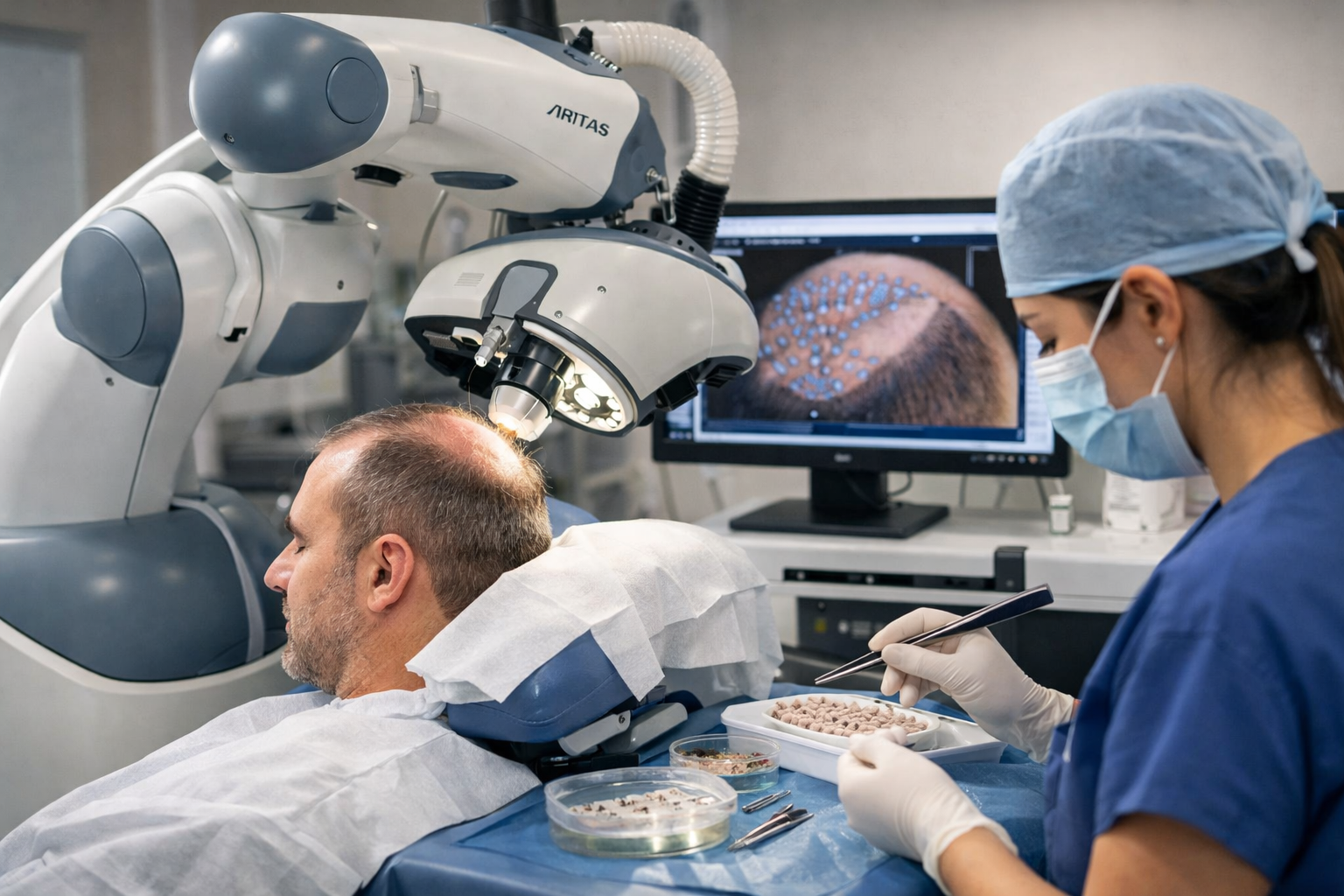
Hair restoration has evolved significantly over the past two decades, moving from traditional strip methods to minimally invasive techniques that deliver natural-looking results. Among the most advanced innovations in this field is the robotic hair transplant. As a hair transplant specialist, I’ve observed firsthand how robotic-assisted procedures are reshaping patient expectations and clinical outcomes.
This detailed review explores robotic hair transplantation from an expert perspective, covering how it works, its advantages, limitations, candidacy, recovery, and whether it truly lives up to the hype.
What Is a Robotic Hair Transplant?
A robotic hair transplant is an advanced form of follicular unit extraction (FUE) that uses artificial intelligence and robotic precision to assist in harvesting hair follicles from the donor area. The system is designed to improve accuracy, consistency, and efficiency during the extraction phase of the procedure.
Unlike traditional FUE, where a surgeon manually extracts each follicle, robotic systems analyse scalp characteristics—such as hair angle, density, and direction—and guide the extraction process with minimal human error.
The implantation phase, however, is still typically performed by a skilled surgeon to ensure artistic placement and natural hairline design.
How the Technology Works
Robotic hair transplant systems rely on a combination of high-resolution imaging, machine learning algorithms, and robotic arms.
Key Steps:
- Digital Mapping of the Scalp
The system scans the patient’s scalp to identify optimal donor hairs. It evaluates follicle groupings, angles, and density. - Automated Follicle Selection
The software selects the healthiest follicular units, avoiding weaker or miniaturised hairs. - Robotic Extraction
A robotic arm performs precise incisions around selected follicles, minimising damage and transection rates. - Manual Implantation
Extracted grafts are implanted by the surgeon, ensuring natural growth patterns and aesthetic results.
Advantages of Robotic Hair Transplant
1. Precision and Consistency
One of the biggest advantages of robotic systems is their ability to maintain consistent accuracy throughout the procedure. Human fatigue is eliminated, which is particularly beneficial during long sessions involving thousands of grafts.
2. Lower Transection Rates
Transection occurs when hair follicles are damaged during extraction. Robotic systems significantly reduce this risk by calculating the exact angle and depth of each follicle.
3. Minimally Invasive Approach
Robotic FUE avoids large incisions, resulting in:
- No linear scarring
- Faster healing
- Reduced discomfort
This makes it an appealing option for patients seeking discreet treatment.
4. Efficient Large Sessions
Robotic assistance allows for faster harvesting of grafts, making it suitable for patients requiring extensive coverage.
5. Data-Driven Decision Making
The technology uses real-time data to optimise graft selection, which can improve overall survival rates of transplanted follicles.
Limitations and Considerations
Despite its advantages, robotic hair transplant is not without drawbacks.
1. Limited Role in Implantation
The artistic aspect of hair transplantation—designing a natural hairline and placing grafts—still depends heavily on the surgeon’s expertise. Robotics cannot replicate human aesthetic judgment.
2. Cost
Robotic procedures are typically more expensive than traditional FUE due to the advanced technology involved. Clinics must invest heavily in equipment, which is reflected in treatment costs.
3. Suitability for Hair Types
Robotic systems may struggle with certain hair types, particularly:
- Very curly hair
- Extremely light or grey hair
These can be harder for the system to detect and analyse accurately.
4. Learning Curve for Clinics
Not all clinics use robotic systems to their full potential. The quality of results still depends on the experience of the medical team operating the technology.
Who Is a Good Candidate?
Robotic hair transplant is best suited for:
- Patients with moderate to advanced hair loss
- Individuals seeking minimally invasive procedures
- Those with sufficient donor hair density
- Patients who prefer shorter recovery times
However, it may not be ideal for individuals with very tight curls or poor donor areas.
A thorough consultation with a qualified specialist is essential to determine suitability.
Procedure Experience
Before the Procedure
Patients undergo a detailed assessment, including:
- Scalp examination
- Hair density analysis
- Medical history review
A personalised treatment plan is then created.
During the Procedure
- Local anaesthesia is applied
- The robotic system performs follicle extraction
- The surgeon prepares recipient sites
- Grafts are implanted manually
The procedure can take several hours depending on the number of grafts.
After the Procedure
Patients may experience:
- Mild swelling
- Redness
- Temporary scabbing
These symptoms typically resolve within a week.
Recovery and Results Timeline
First Week
- Healing of donor and recipient areas
- Scabs begin to fall off
First Month
- Transplanted hairs may shed (shock loss)
3–6 Months
- New hair growth begins
9–12 Months
- Visible improvement in density
12–18 Months
- Final results achieved
Robotic transplantation does not accelerate hair growth itself, but it can improve graft survival, which influences the final outcome.
Robotic vs Traditional FUE
| Feature | Robotic FUE | Manual FUE |
|---|---|---|
| Precision | High | Depends on surgeon |
| Speed | Faster harvesting | Slower |
| Consistency | Very consistent | Variable |
| Cost | Higher | Moderate |
| Artistic Control | Partial | Full |
While robotic systems enhance technical precision, manual expertise remains crucial for achieving natural results.
Results: What to Expect
When performed correctly, robotic hair transplants can produce:
- Natural hairlines
- Even density distribution
- Minimal scarring
- Long-lasting results
However, unrealistic expectations should be avoided. Hair transplantation redistributes existing hair—it does not create new follicles.
Risks and Safety
Robotic hair transplant is generally safe when performed by qualified professionals. Potential risks include:
- Infection (rare)
- Temporary numbness
- Uneven growth (if poorly executed)
- Overharvesting of donor area
Choosing a reputable clinic significantly reduces these risks.
Cost in the UK
In the UK, robotic hair transplant costs typically range between:
- £4,000 to £12,000+
Prices vary depending on:
- Number of grafts
- Clinic reputation
- Surgeon expertise
- Technology used
While more expensive, many patients consider the precision and reduced recovery time worth the investment.
Expert Opinion: Is It Worth It?
From a clinical perspective, robotic hair transplant represents a significant advancement in hair restoration technology. It offers enhanced precision, improved graft quality, and a more streamlined procedure.
However, it is not a replacement for surgical skill.
The best results come from a combination of:
- Advanced technology
- Experienced surgeons
- Personalised treatment planning
Patients should not choose a clinic solely based on the availability of robotic systems. The expertise of the medical team remains the most important factor.
Common Myths Debunked
“Robots Perform the Entire Procedure”
False. The robot assists with extraction, but surgeons handle critical aspects like design and implantation.
“Results Are Instant”
Hair growth takes time. Full results can take up to 18 months.
“It Works for Everyone”
Not all patients are suitable candidates. Individual assessment is essential.
Final Thoughts
Robotic hair transplant is an impressive step forward in the field of hair restoration. It combines technology with medical expertise to deliver precise and reliable outcomes.
For patients in the UK seeking a minimally invasive, high-tech solution to hair loss, it is certainly worth considering. However, success ultimately depends on choosing the right clinic and an experienced surgeon who understands both the science and artistry of hair transplantation.
If approached with realistic expectations and proper guidance, robotic hair transplant can provide transformative, natural-looking results that restore not just hair—but confidence as well.