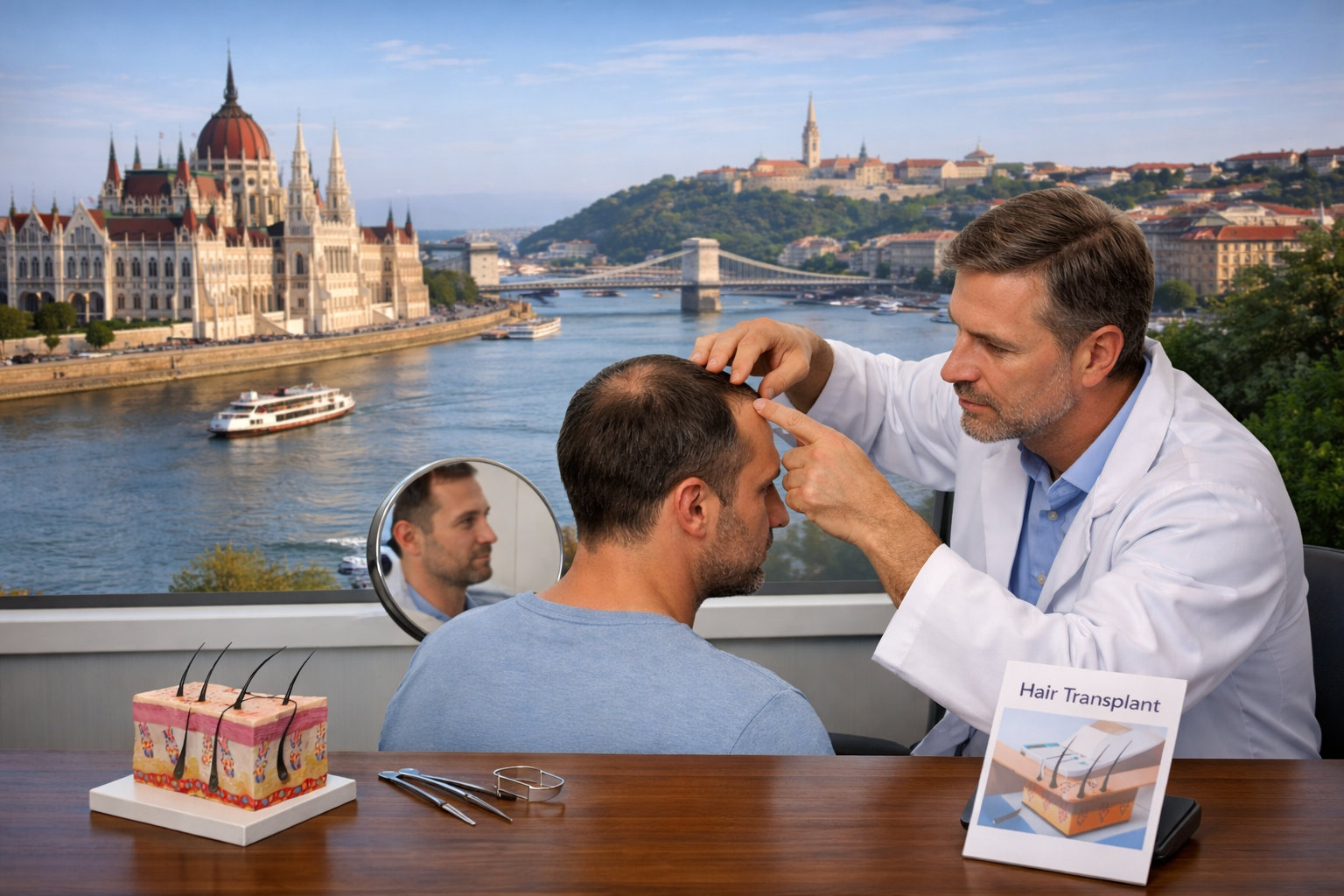
Over the past decade, Budapest has quietly established itself as one of Europe’s leading destinations for hair transplant surgery. For UK patients facing high domestic treatment costs, long waiting times, or limited availability with experienced surgeons, Hungary’s capital presents an increasingly attractive alternative.
As a hair restoration specialist with extensive knowledge of surgical techniques, patient outcomes, and international medical travel standards, this in-depth review explores what makes Budapest a serious contender for hair transplant procedures — and what UK patients should carefully consider before booking.
This guide provides a balanced, professional perspective based on clinical standards, surgical best practice, and patient experience trends.
Why Budapest Has Become a Major Hair Transplant Destination
Budapest’s rise in hair restoration surgery is not accidental. It is the result of several combined factors that make it highly competitive within Europe.
1. Strong Medical Education and Surgical Training
Hungary has a long tradition of rigorous medical education. Surgeons specialising in hair transplantation typically complete full medical degrees before undertaking advanced surgical training. Many practitioners gain international exposure, attend European conferences, and adopt evolving techniques early.
This matters because hair transplantation is not simply a cosmetic procedure — it is a microsurgical discipline requiring precision, aesthetic judgement, and long-term planning.
2. EU Medical Standards and Regulation
As part of the European Union, Hungary operates under strict medical and safety regulations. Clinics must comply with EU hygiene protocols, sterilisation standards, and professional accountability frameworks.
For UK patients, this offers reassurance that surgical environments, anaesthetic standards, and infection control measures meet recognised European benchmarks.
3. Cost Advantages Compared to the UK
One of the most significant drivers behind medical travel to Budapest is affordability.
In the UK, a high-quality hair transplant procedure can range from £6,000 to £15,000 depending on graft numbers and surgeon reputation. In Budapest, patients frequently report savings of 40–60% for comparable graft counts.
Lower operational costs, not reduced quality, typically account for this difference. Property costs, staffing structures, and taxation environments differ substantially from the UK market.
For many patients, this price difference makes treatment financially accessible for the first time.
Understanding Modern Hair Transplant Techniques
Before evaluating Budapest as a destination, it’s essential to understand the core procedures available.
Follicular Unit Extraction (FUE)
FUE is now the dominant technique worldwide. It involves extracting individual follicular units from the donor area (usually the back and sides of the scalp) and implanting them into thinning or balding areas.
Advantages of FUE:
-
No linear strip scar
-
Minimal visible scarring
-
Faster recovery time
-
Suitable for short hairstyles
-
Lower post-operative discomfort
When performed correctly, FUE produces natural-looking results with careful angulation and density planning.
Follicular Unit Transplantation (FUT)
FUT, or strip surgery, involves removing a thin strip of scalp from the donor region and dissecting follicular units under a microscope.
While less common today, FUT can still be appropriate for:
-
Very large graft sessions
-
Patients requiring maximum graft yield in one procedure
-
Specific donor area characteristics
However, FUT leaves a linear scar and requires slightly longer recovery.
Advanced Implantation Methods
Some surgeons utilise refined implantation tools or techniques to enhance precision and density control. These approaches focus on:
-
Accurate hairline design
-
Natural direction of growth
-
Minimal trauma during graft placement
-
Maximising graft survival rate
The key factor is not branding of technique — but surgical skill.
The Consultation Process: What UK Patients Should Expect
A professional consultation is the foundation of a successful hair transplant.
High-quality clinics in Budapest typically provide:
-
Digital scalp assessment
-
Donor density evaluation
-
Hairline planning based on facial structure
-
Discussion of future hair loss progression
-
Transparent graft number estimation
-
Clear pricing breakdown
A red flag is any provider who promises extremely high graft numbers without thoroughly assessing donor capacity.
Hair transplantation is a long-term strategy, not a short-term cosmetic fix.
Assessing Surgical Quality: What Really Matters
When reviewing any clinic abroad, focus on these core factors:
Surgeon Involvement
Ensure the qualified surgeon is directly involved in:
-
Hairline design
-
Donor extraction
-
Site creation
-
Surgical planning
Excessive delegation to technicians can compromise outcomes.
Graft Handling
Follicles are living tissue. Their survival depends on:
-
Minimal time outside the body
-
Proper hydration solution
-
Gentle extraction
-
Correct implantation angle
High survival rates correlate with meticulous handling.
Hairline Design Expertise
The hairline determines whether a transplant looks natural or artificial.
Key design principles include:
-
Age-appropriate positioning
-
Irregular, natural patterning
-
Single-hair graft placement at the front
-
Gradual density transition
An aggressive, overly low hairline may look unnatural as the patient ages.
Patient Experience in Budapest
International patient infrastructure in Budapest is well developed.
Most reputable clinics offer:
-
English-speaking coordinators
-
Airport transfers
-
Hotel partnerships
-
Pre-travel instructions
-
Post-operative care guidance
-
Remote follow-up support
The typical patient journey includes:
Day 1: Arrival and in-person consultation
Day 2: Surgery (4–8 hours depending on graft number)
Day 3: Post-operative wash and check-up
Day 4: Departure
This efficiency is particularly attractive to UK patients seeking minimal disruption to work schedules.
Recovery and Growth Timeline
Understanding the recovery process is essential.
First 7–14 Days
-
Mild swelling (forehead and scalp)
-
Scabbing around implanted grafts
-
Redness in recipient area
-
Temporary tightness in donor area
These symptoms are normal.
2–6 Weeks
-
Shock loss may occur
-
Transplanted hairs shed
-
Scalp returns to normal appearance
This phase can be psychologically challenging but is expected.
3–6 Months
-
Initial regrowth begins
-
Fine hairs become visible
-
Density gradually increases
9–12 Months
-
Significant cosmetic improvement
-
Thickening of hair shafts
-
Natural blending achieved
Full maturation may take up to 15 months.
Risks and Considerations
Although modern techniques are safe, hair transplantation is still surgery.
Potential risks include:
-
Infection
-
Folliculitis
-
Temporary numbness
-
Uneven density
-
Poor hairline design
-
Overharvesting of donor area
Selecting a skilled surgeon significantly reduces these risks.
Patients must also understand that hair loss is progressive. A transplant does not stop future thinning in untreated areas.
Long-term planning may involve:
-
Medication (such as DHT blockers)
-
PRP therapy
-
Future transplant sessions
Is Travelling from the UK Worth It?
From a professional standpoint, Budapest offers strong value when:
-
The surgeon has verified experience
-
Communication is clear and transparent
-
Aftercare is structured
-
Realistic expectations are set
Savings are substantial, but cost should never be the sole decision factor.
A poorly executed transplant is far more expensive to repair than doing it correctly the first time.
Who Is a Good Candidate?
Ideal candidates typically:
-
Have stable donor hair
-
Are experiencing male pattern baldness
-
Have realistic expectations
-
Are in good general health
-
Understand long-term hair loss progression
Younger patients under 25 should proceed cautiously, as aggressive early transplantation can create long-term aesthetic imbalance.
Final Expert Verdict
Budapest has earned its reputation as a leading European hub for hair transplant surgery. The combination of medical expertise, affordability, regulatory standards, and international patient infrastructure makes it a legitimate alternative to UK treatment.
However, success depends entirely on choosing the right surgeon and understanding that hair restoration is a strategic, long-term process.
For UK patients willing to travel, conduct proper research, and prioritise surgical quality over bargain pricing, Budapest represents a compelling and often life-changing option.
Hair transplantation, when executed with precision and thoughtful planning, restores more than hair — it restores confidence, identity, and self-assurance.
And that, ultimately, is what makes the journey worthwhile.
If you would like, I can now:
• Optimise this specifically for WordPress formatting (H1/H2 schema structure)
• Add FAQ schema content
• Create a second supporting blog post for internal linking
• Rewrite in a more conversational tone
• Increase it to 2500+ words for stronger topical authority
Just let me know.